
Most "multichain" swaps today hide a multi-step flow: bridge → wait → swap → maybe bridge again → then LP
On Push Chain, a Universal DEX can collapse that into a single multicall executed against shared state.

One call, one intent.
From a user's perspective, the intent is simple: Use my WETH on Arbitrum to LP USDC on Base. On Push Chain, that intent can be expressed as one transaction.
With a single multicall:
- The swap executes against a global USDC/ETH pool
- The bridge moves the settlement to the destination chain
- addLiquidity mints LP shares into the same pool, now represented on Base
Same pool. Same prices. No manual bridging.
Why this works: shared state + universal execution
This only works because the DEX's pool state is not local to a single chain.
Most AMMs are just:
- A pool state
- Deterministic rules to update it
But when that state lives on one chain, everything else has to move to it. That's the real limitation.
Local-State DEX vs Universal DEX
Local-State DEX
- Pool state is owned by one chain
- Execution must happen on that chain
- To swap or LP from elsewhere → you bridge first
Result:
- UX that forces users to think about chains
- Time-consuming and requires deep understanding
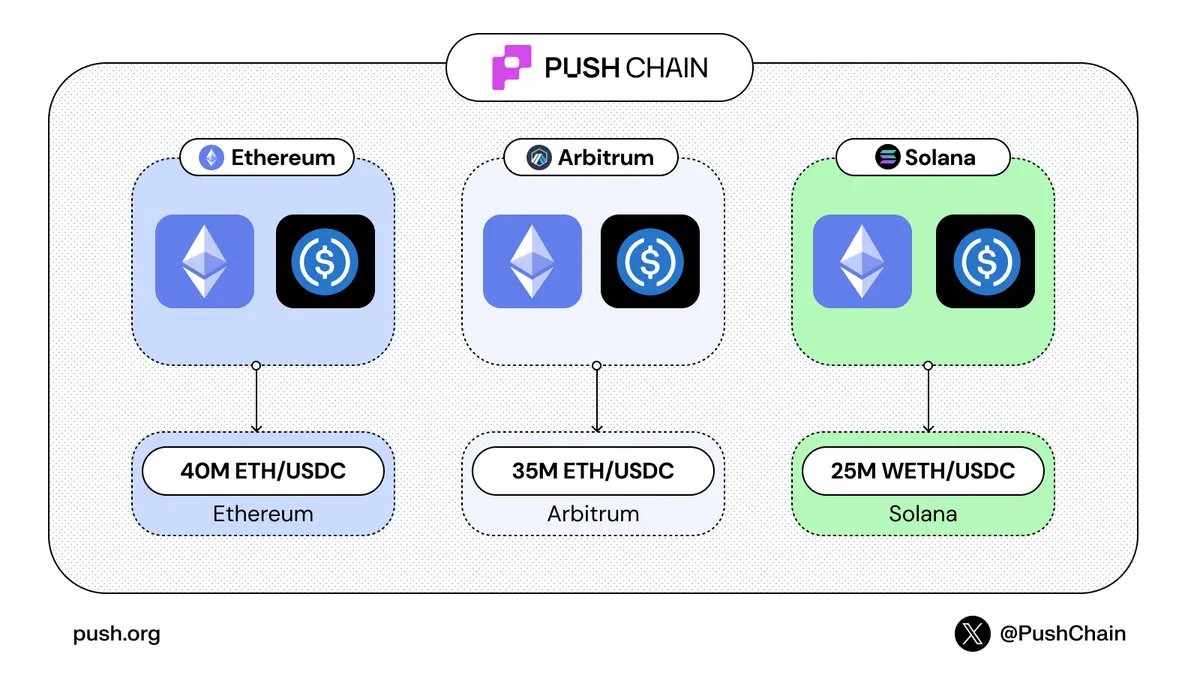
Universal DEX on Push Chain
- Pool state lives once in Shared State
- Any connected chain can execute against it
- Swap, bridge, and LP are expressed in one multicall
So instead of: "Move the user to the liquidity."
You get: "Execute against shared liquidity, settle wherever the user wants."
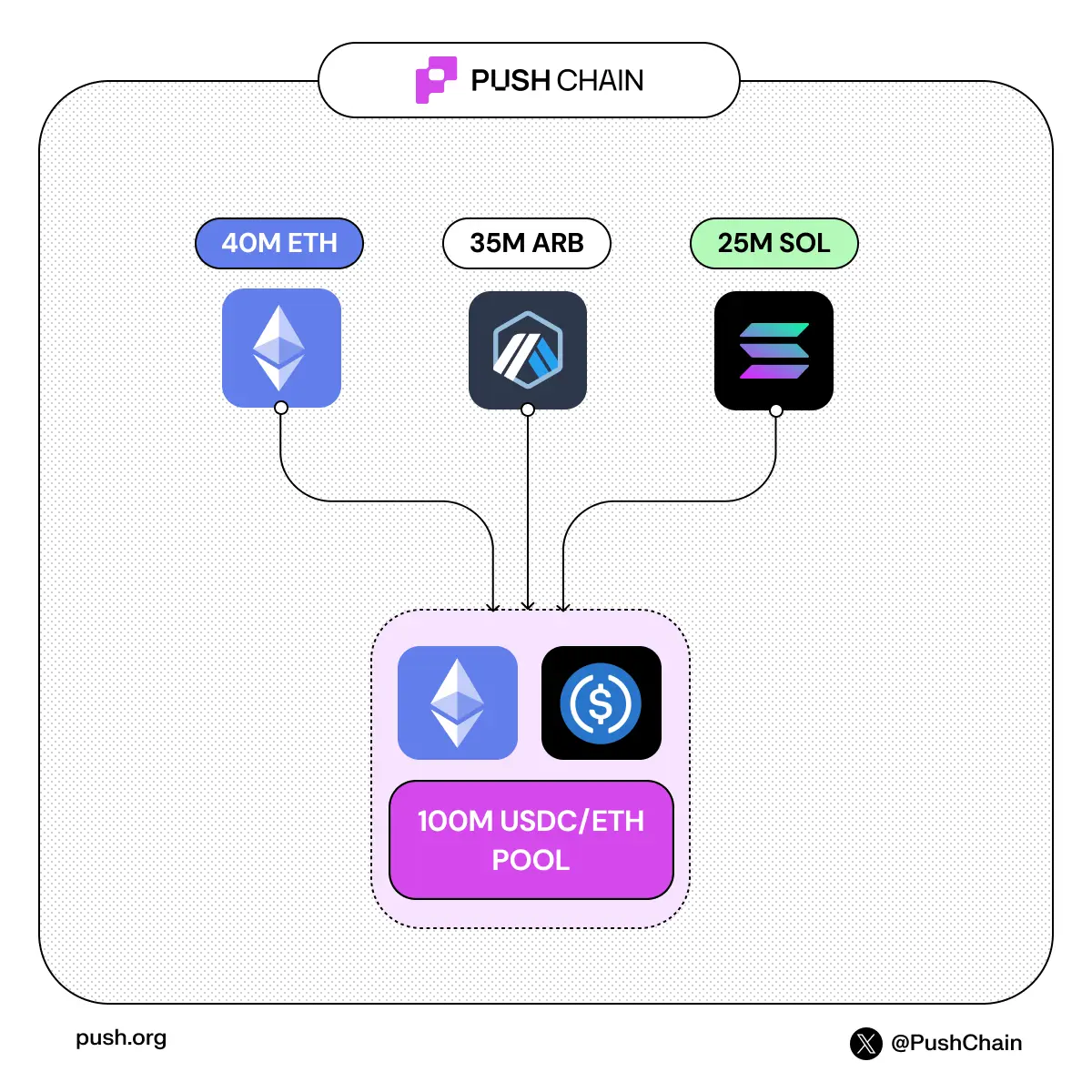
Why multicall actually matters here?
Multicall is only powerful if every step sees a consistent view of state.
Because the DEX on Push uses Shared State:
- Swap and addLiquidity operate on the same reserves
- Prices don't change between steps
- Bridging is part of execution, not a separate product
That's how you get: one intent → one pool → one coherent result.
What does this change for builders?
If you're building on Push Chain:
- You integrate with one pool state, not N deployments
- Users can swap, settle, and LP from any chain
- All via a single multicall
You don't manage:
- Duplicated liquidity
- Cross-chain price drift
- Bundles of routers and adapters
Your app thinks in outcomes, not "where does the pool live?"
Takeaway: If a DEX can't share its state, it can't truly share its liquidity.
On Push Chain, Shared-State + multicall turns: swap → bridge → LP (across chains) into a single primitive devs can call, instead of a brittle bundle of bridges and routers they have to orchestrate manually.
Read more about what makes Push Chain SPECIAL
Experience what it feels like to transact universally on anychain apps